

Corban Coffee
Hacienda La Luisa
Hacienda La Luisa
Couldn't load pickup availability
Farm: Hacienda La Luisa
Owner: Coope Libertad
Location: Sarchi, West Valley, Costa Rica
Altitude: 1450-1800masl
Varietal: Villa Sarchi
Process: Washed
Roast: Omni
Notes of: Peach, honey and cocoa
We sourced this coffee through Mercanta Coffee Hunters who had the following to share:
The story of Hacienda La Luisa began in 1954, when the farm was purchased by a family of German origin in the hills of Sarchí, Costa Rica. At the time, the land was mainly used for dairy farming, but over the years the family gradually transitioned into growing coffee and sugar cane, taking advantage of the region’s rich volcanic soil and cool climate. Today, Hacienda La Luisa is known not only for its coffee production, but also for its importance to the surrounding community and environment. The farm helps protect important water sources for Sarchí and nearby towns, while also providing jobs for families in the rural communities of Los Angeles, Pueblo Nuevo, and La Luisa.
The farm sits in a beautiful area with views across Costa Rica’s Central and Western Valleys. On clear days, it is even possible to see the Póas, Barba, Irazú, and Turrialba volcanoes in the distance. The combination of volcanic soil, cloud cover, and elevation creates excellent conditions for growing high-quality coffee.
Hacienda La Luisa produces around 1,300 bags of coffee each year, with approximately 35% of the production sold into the specialty coffee market. While coffee is the farm’s main focus, sugar cane is also grown on the property. The average age of the coffee trees is around 27 years old. To maintain healthy production, the farm carries out annual pruning using a 1x3 row cycle over a six-year rotation. Several coffee varieties are grown on the farm, including Kenya SL28, Villa Sarchí, Catuai, Caturra, Costa Rica 95, Marsellesa, Sarchimor, and San Isidro. These varieties were selected for their productivity, disease resistance, climate adaptability, and cup quality. Like many coffee producers, the farm faces ongoing challenges. A shortage of labor for manual work, climate change, coffee rust disease, and aging coffee trees are some of the main concerns affecting the region today. To support plant health and productivity, the farm uses tailored fertilizer and nutrient programs for different lots and harvest periods. Lots are separated based on coffee variety and cherry maturation, allowing the farm to manage each batch more carefully.
Sustainability is also an important part of Hacienda La Luisa’s approach. Around 55% of the property is protected as primary forest and private reserve. The farm maintains programs for native tree reforestation, water conservation, and the protection of local wildlife, helping preserve the area’s natural biodiversity. The farm continues to invest in improvement and innovation by testing new coffee varieties and exploring updated planting and maintenance practices. Interestingly, the farm has observed some positive effects from recent climate changes, including reduced winds and increased sunlight, which have helped coffee plants develop more effectively.
Beyond coffee production, Hacienda La Luisa is also involved in supporting the local community. Together with Beneficio La Eva, the farm maintains a soccer field and recreational facilities where children and families from the area can gather and participate in healthy activities.
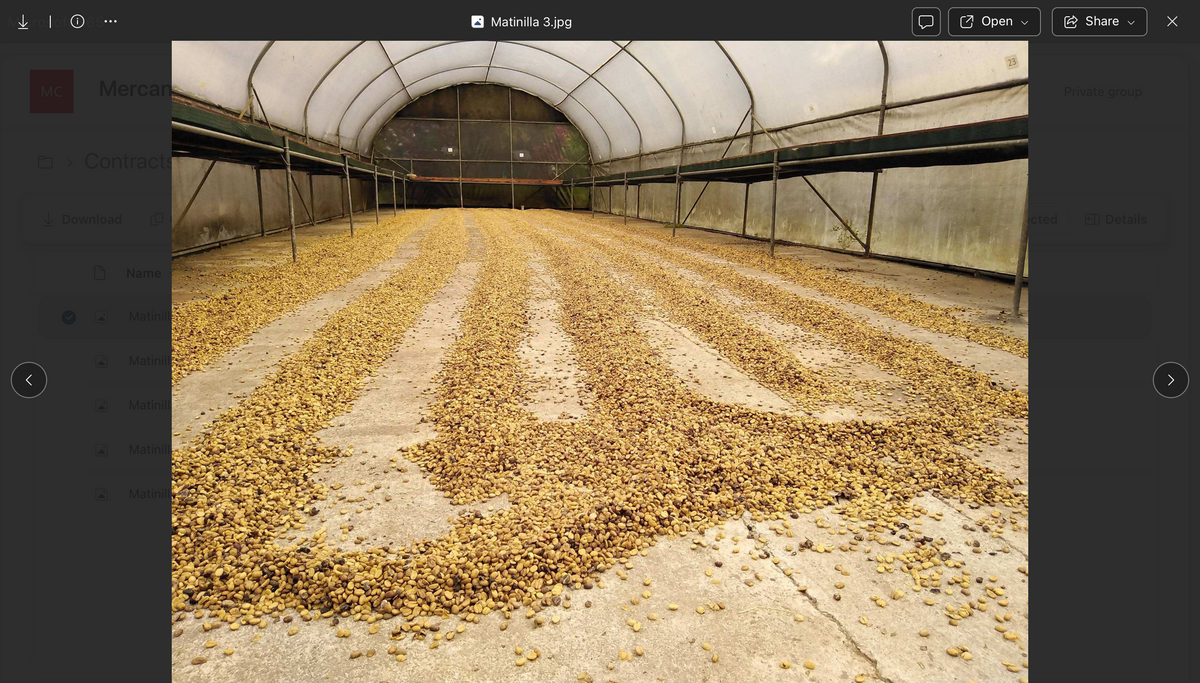
After being carefully hand-picked at peak ripeness, the coffee cherries from Hacienda La Luisa are sorted by hand to remove any defects before processing begins. Harvest takes place in three stages throughout the season: early, mid-season, and late harvests, with additional sorting used to ensure only the ripest cherries are selected. The coffee is then transported 9 km to Beneficio La Eva S.A., where it is processed using an eco-pulping system that uses significantly less water than traditional methods. The cherries are pulped and mechanically washed using a vertical demucilager called a “delva,” without fermentation. After washing, the coffee is pre-dried in vertical dryers for 10 to 12 hours before moving to Guardiola dryers for final drying. Throughout the process, careful temperature and moisture control help maintain quality and consistency.
Share